
"Space is no longer simply a one way mission for satellites and on-orbit payloads. These assets can now be returned safely to earth for repurposing, and in addition help mankind de-clutter our current LEO orbital pathways."
SINGULARORBIT
Vanguard 1
Returning home in 2028
1958-002B (COSPAR ID)
"...it should not be forgotten that the longest-lived of all satellites, which would be in orbit a thousand years hence, apart from the near certainty that it will soon be collected for the Smithsonian Aerospace Museum, is the little three-pound Vanguard 1, launched March 17, 1958."
Arthur C. Clarke, The Promise of Space, Harper & Row, NY, 1968, pp71-2.
Mission Codename
"The Relic"
In 1955, a small group of engineers at the U.S. Naval Research Laboratory set out to do something no one had yet accomplished for science alone: launch a satellite, not for war, but for knowledge. The project was called Vanguard.
While the world’s powers were flexing their new rockets, Vanguard’s purpose was quieter. It was meant to be a clean, civilian scientific mission for the upcoming International Geophysical Year—a global effort to study Earth from pole to pole. The early attempts were painful. Test rockets exploded on the pad and tumbled into the Atlantic. The press called one failure “Kaputnik.” But the engineers kept at it, refining the three-stage launch vehicle, shaving off grams, and checking circuits by hand.
Then, on March 17, 1958, the gamble paid off. From Cape Canaveral, a slender Vanguard booster pierced the Florida sky carrying a payload that weighed less than a quart of milk: a six-inch aluminum sphere with six whip antennas. Inside it were a few grams of transistors, two thermistors, and two radio transmitters—one battery-powered, one solar-powered. That made it the first satellite to use solar energy in orbit.
When it reached orbit, radio operators around the world heard its faint beep-beep-beep at 108 megahertz. For months it sent data on temperature, electron density, and micrometeoroid impacts. Tracking stations measured its orbit and found something unexpected—the Earth wasn’t perfectly round. The planet bulged differently at the poles and equator, just slightly, like a pear. That insight alone rewrote geodesy textbooks. The battery transmitter died after twenty days, but the solar one sang for over six years. By the time it went silent in 1964, the little sphere had outlived nearly all of its early peers.
Some engineers talk about bringing it home one day, to place it in a museum where people can stand before it and realize how small a beginning can change everything. But for now, Vanguard 1 remains aloft—humanity’s oldest surviving emissary in orbit, a tiny polished sphere still keeping silent watch over the world that launched it.
Today, is that day .... today we start planning, designing, testing and preparing to bring Vanguard 1 home to the United States in 2028.
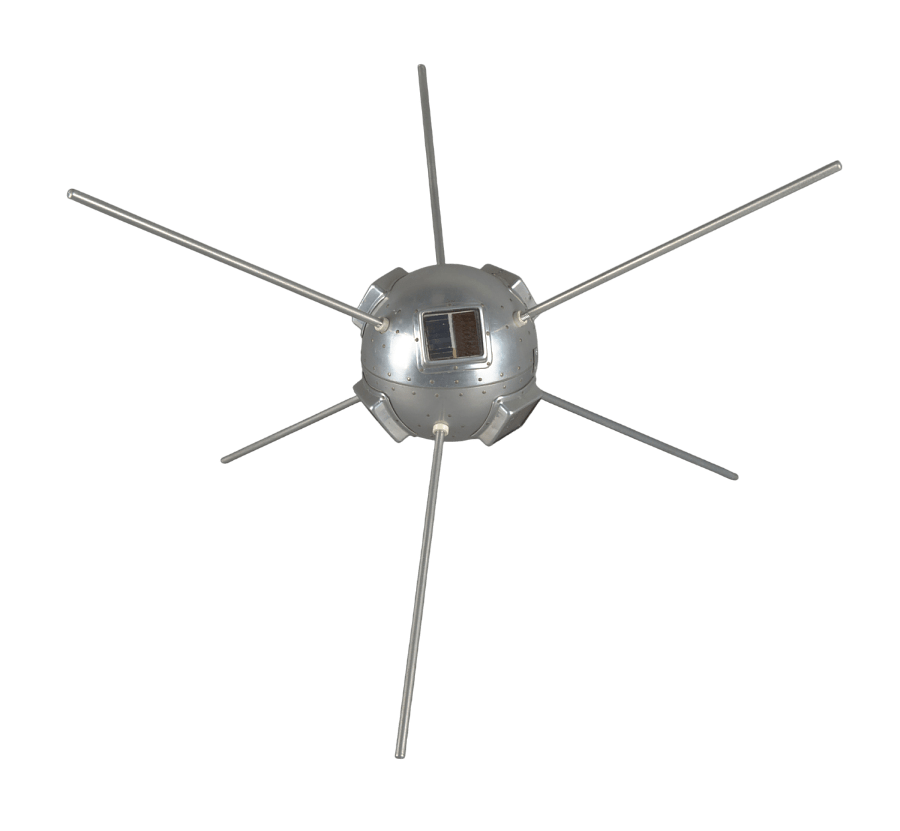
Vanguard 1 - 1958-002B
Inadvertent Time Capsule
70 Years On-orbit in 2028
How do I get involved
Currently SINGULARORBIT is building the team for CONOPS and DEVOPS system proposals. If you have a strong background in engineering, space flight, or related fields please get in touch with us via our contact section.
For all press related requests, please use contact@singularorbit.com.
People ask us "Why would you want to go to the trouble and expense of bringing a satellite as old as Vanguard 1 back to Earth? What is the benefit?"
There are several reasons why we want to bring Vanguard 1 safely back to Earth.
1. Historical significance: Vanguard 1 was the fourth artificial satellite launched into space by the United States and played a significant role in the early days of the space race. Bringing it back to Earth would allow for further study and preservation of this important piece of space history.
2. Scientific research: Vanguard 1 is still in orbit around Earth and could provide valuable data for scientific research. By bringing it back to Earth, scientists could study the effects of long-term exposure to space on the satellite's components and materials.
3. Space debris mitigation: Vanguard 1 is considered space debris and poses a potential risk to other satellites and spacecraft in orbit. By safely deorbiting Vanguard One and bringing it back to Earth, the risk of collision with other objects in space would be reduced.
4. Environmental concerns: Bringing Vanguard 1 back to Earth would help prevent the spread of space debris and reduce the amount of man-made objects in orbit around our planet, contributing to a cleaner and safer space environment.
5. When the engineers who launched Vanguard 1 into orbit watched it soar into the heavens, they could not have known that they were leaving us a time capsule of amazing information. In 2028 it will have been in orbit for 70 years. The longest man-made object orbiting earth (or any solar body).
